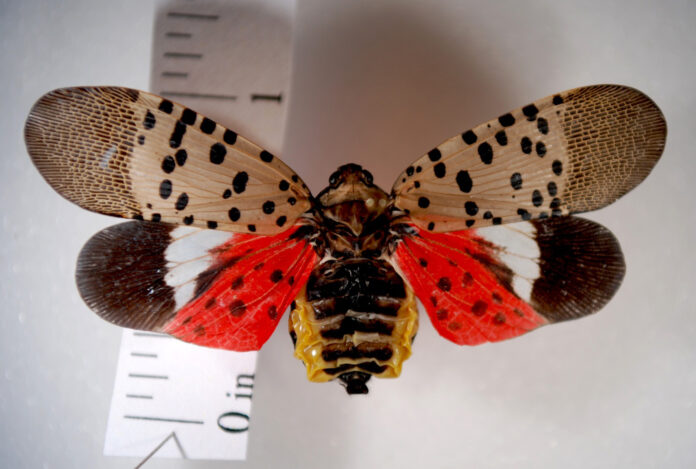
The Ohio Department of Agriculture this week announced that funding is available for communities working to combat the invasive spotted lanternfly and its host – the invasive tree of heaven.
To support local efforts, a limited number of grants, up to $15,000 each with an in-kind match of 10%, are available to organizations working to control spotted lanternfly (SLF) populations (universities and extension offices excluded).
State and local government agencies, parks systems and nonprofit organizations with a track record of success in invasive plant or pest management are encouraged to apply. Priority will be given to agencies working in the most infested areas.
“The invasive spotted lanternfly continues to spread in Ohio,” said ODA Director Brian Baldridge. “ODA is committed to working with our local communities to take action against SLF. Whether it’s removing the invasive host, tree of heaven, engaging residents, or applying targeted treatments, these resources can be used to suppress SLF populations across Ohio.”
Projects funded through the grant may include:
- Removal of trees of heaven.
- Herbicide treatment to prevent regrowth.
- Targeted insecticide treatments for spotted lanternfly.
- Egg mass identification and removal.
- Community engagement activities to help control the pest.
Funding was made available under a cooperative agreement with USDA Animal and Plant Health Inspection Service’s Plant Protection and Quarantine. This is the second round of funding available for communities. The submission deadline is Sept. 30, 2026. Organizations are encouraged to apply online.
Spotted lanternfly in Ohio
Spotted lanternfly, native to Asia, was first detected in Jefferson County, Ohio, in 2020 and has since spread to additional areas across the state. The insect poses a serious threat to grapes, hops, stone fruits and other economically significant crops.
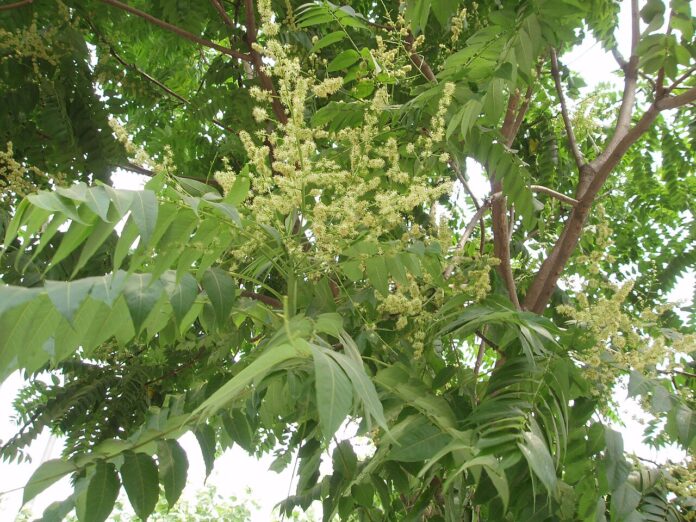
Spotted lanternfly primarily feeds on the tree of heaven (Ailanthus altissima), an invasive plant species not native to Ohio. The tree of heaven grows in a variety of environments, including along transportation corridors such as railroads and highways, which are known pathways for the spread of SLF. The plant also produces compounds that suppress the growth of nearby vegetation, limiting its competition.
Because SLF is now established in parts of Ohio and active management efforts are underway, ODA is no longer encouraging reports of individual sightings from the public. Recommendations on treatment methods for SLF on private property can be found in ODA’s Spotted Lanternfly Management Guide.
Metro Monthly is a local news and events magazine based in Youngstown, Ohio. We circulate throughout the Youngstown/Warren Mahoning Valley region (and beyond) with print, online and flipbook editions. Be sure to visit our website for news, features, restaurants, local history and essential Valley events. We offer print and website advertising. Office: 330-717-8785.
© 2026 Metro Monthly. All rights reserved.